
HORREDS 1999
A time defined by rapid technical developments and new ways of working. As computers found their place on every desk, behaviour changed – and Horreds adapted, creating furniture to meet a new set of needs.
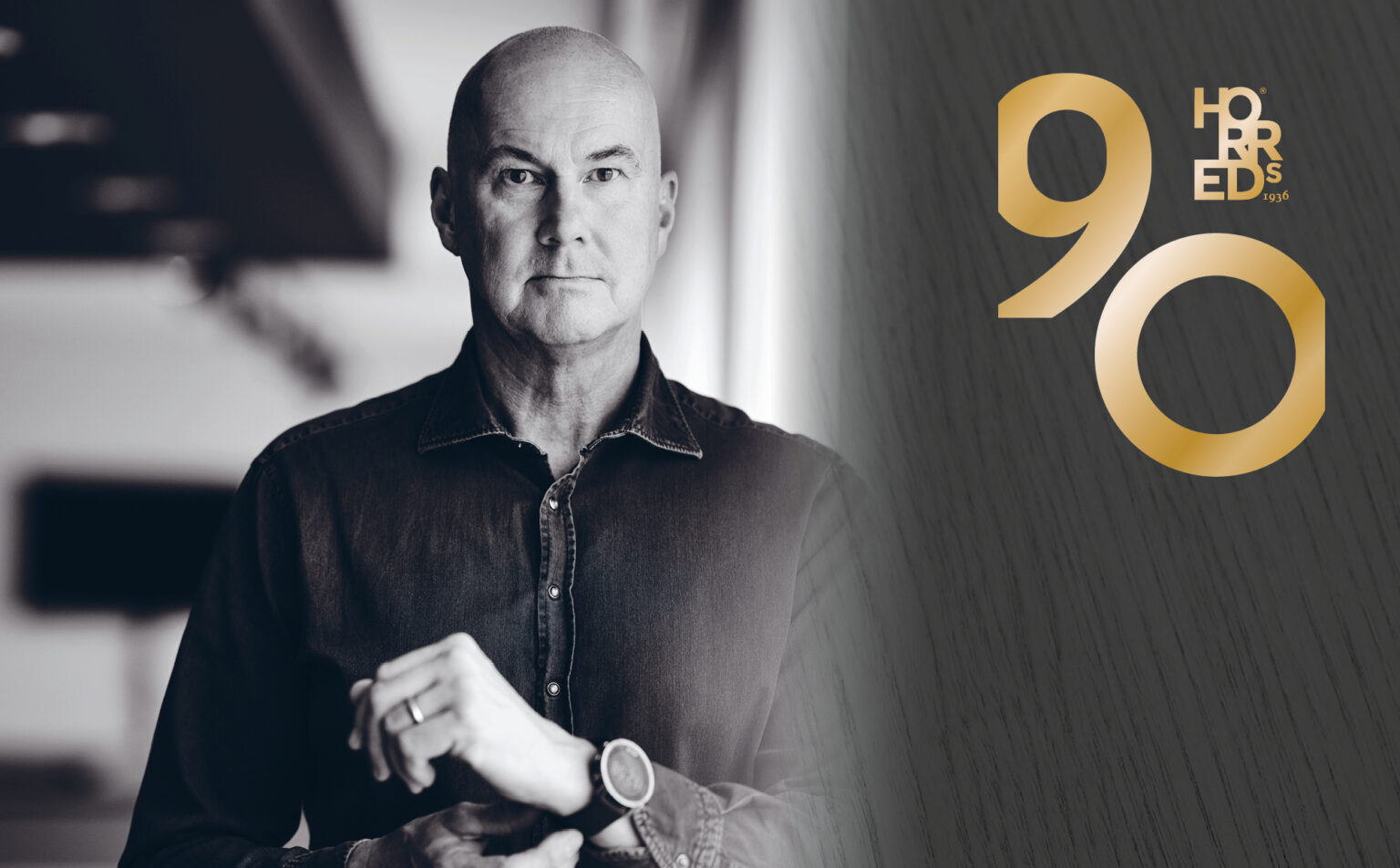
WHEN PER-OLA JOHANSSON BECAME CEO IN 1999, HORREDS FOUND NEW ENERGY.
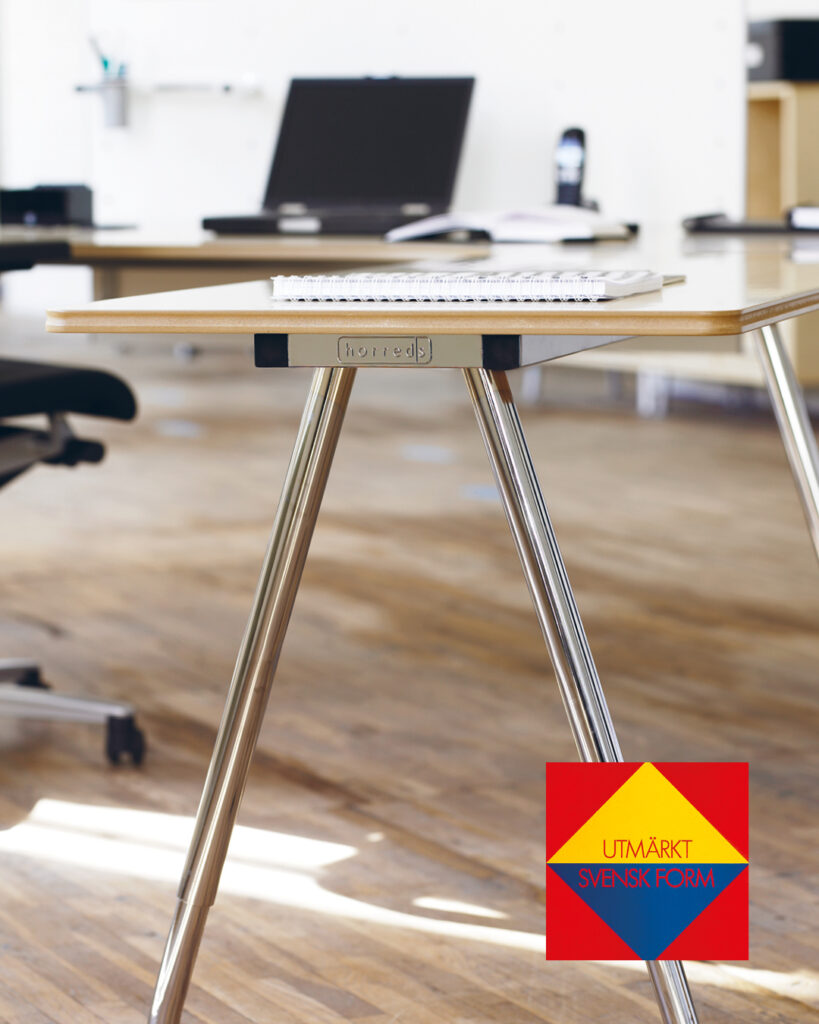
The company was ahead of its time – electric sit/stand desks gained momentum and Fri was launched, a smart furniture series honoured with the Excellent Swedish Design award.
MADE TO ORDER
Horreds took a decisive step into the future by introducing a make-to-order production model instead of keeping large stocks. Each item was built upon request – a shift that demanded rethinking the entire process, but also laid the foundation for today’s sustainable production.
NEW DESIGN COLLABORATIONS
Several important collaborations were established during this time. Designers such as Fredrik Mattson, Lars Pettersson and Morgan Rudberg brought fresh perspectives and ideas that strengthened Horreds’ position on the contemporary design scene.
OUT INTO THE WORLD
Around the turn of the millennium, Horreds began its export journey. Showrooms opened in Copenhagen, Stockholm and Oslo – marking the company’s transition into an international player with Swedish craftsmanship as its hallmark.
Per-Ola:
The equation of quality, design and value – It was 1999 when Per-Ola Johansson, then 33 years old, took over as CEO – marking the beginning of a new chapter in Horreds’ history.
Two years earlier, in 1997, the company had been at its peak: order books were full, production was running at full speed and optimism was high. But when the recession hit the following year, Horreds lost several million in revenue. It was a test – but also a turning point. By 1999, the company had regained its footing and emerged stronger than ever.
GROWING UP – GROWING IN
Growing up in Horred meant being close to both the wood and the people who shaped it. For Per-Ola, stepping into the business felt natural – he learned the trade from the inside, metfurniture dealers across Sweden and had ideas about how things could be done differently. When he became CEO, it was with a drive to evolve, but also with respect for what had already been built. Until 2015, he shared ownership of Horreds with his sister Åsa.
1999 marked a soaring start. “Business was booming. We had 85 employees and our turnover was nearly one hundred million kronor. Everything felt possible.” But reality soon caught up.
THROUGH CRISES.
Just a year later came the Ericsson crisis – thousands of office workplaces disappeared overnight. “Suddenly, the market was flooded with used desks. I had to let fifty people go. It was a brutal start – but it shaped us. We learned to handle crises and became resilient.”
The 2000s began shakily but sparked a new philosophy as Horreds moved from stock production to make-toorder manufacturing. “Two cabinets ordered meant two cabinets produced – not two hundred in stock. It was a huge change, but it became our way forward.”
DESIGN LEAP.
It was also a time of new collaborations with leading designers, while Horreds’ own team developed the modular VX series. “Maybe not an icon, but it carried us. It became our backbone. Without it, we couldn’t have created the more visionary pieces.”
For Per-Ola, the early 2000s were a
balancing act between business sense and design ambition. “You want to sell now – but you also have to think: will this furniture still be viable in ten years? Quality, design and value must endure.” Those first years at the helm became a journey through both crisis and creativity, where leadership was tested daily. “My grandfather was a patriarch, my father and uncle were natural authorities. I was 33. Respect couldn’t be inherited – it had to be earned.”